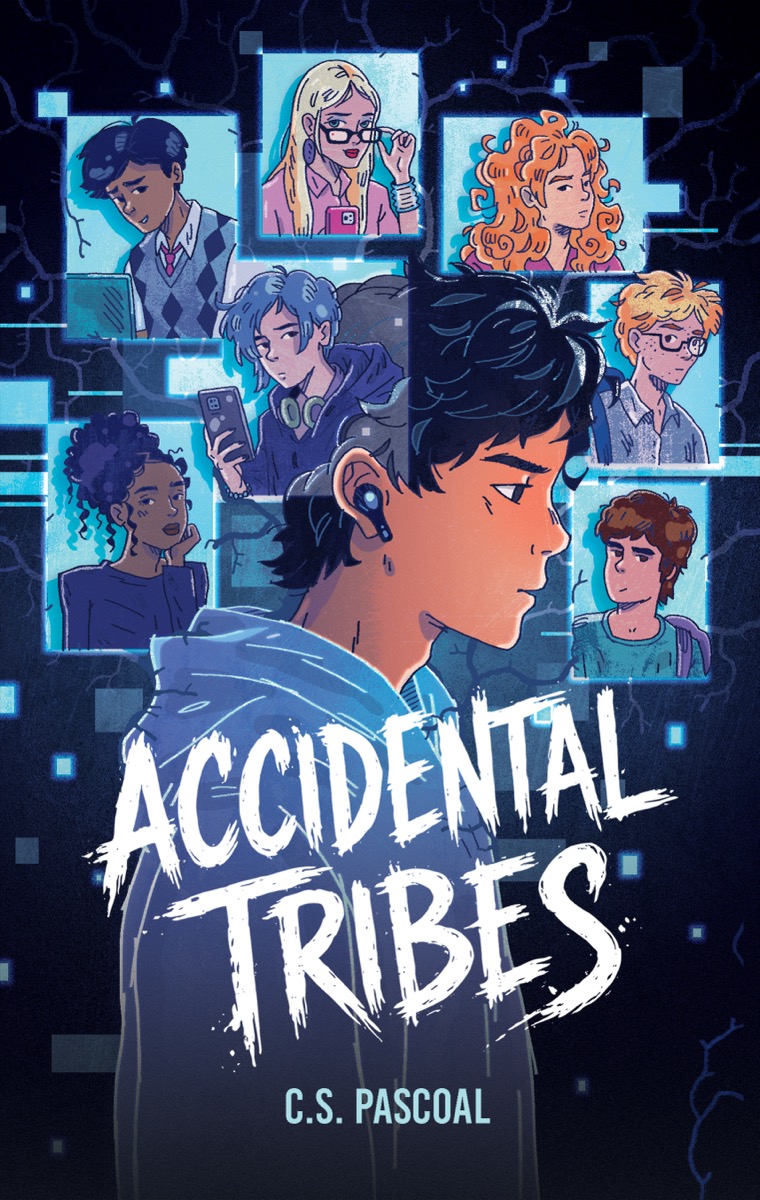
A forgotten classroom becomes the unlikely center of Accidental Tribes. C. S. Pascoal explains Solitaria, the eight students sent there, and the purpose behind Experiment 359.
What inspired the forgotten classroom, Solitaria?
In Accidental Tribes, Solitaria represents a space the school has overlooked, occupied by students who have also been reduced to assumptions. A forgotten room becomes a place where they might finally pay attention to one another.
That relationship between the room and its occupants is important to me. We can overlook a place because we believe we already know its purpose. We can do something similar to people. Once a student has been categorized, others may stop looking closely. Solitaria creates room for the reader to ask what has been missed and what might become possible when someone pays attention again.
Why place eight very different students in one confined space?
Putting eight very different students together in Accidental Tribes creates friction. Their usual social strategies become less useful when they cannot simply retreat into their familiar groups.
A confined setting also gives relationships time to become more complicated. A first impression has to survive another conversation, another disagreement, another moment of vulnerability. Someone you would ordinarily avoid may reveal something you recognize in yourself. I wanted that repeated contact to matter. The students do not have to become alike to affect one another; their differences are part of what makes the group worth watching.
What is Experiment 359 really testing?
On its surface, Experiment 359 in Accidental Tribes is a 30-day intervention. Underneath, it tests whether people can reconsider what they think they know about someone else. It also raises a question for the institution itself: What responsibility does a school have for the conditions in which its students struggle?
An intervention carries assumptions about who needs to change and who gets to define success. I’m interested in those assumptions. What counts as progress? Is someone being heard, or simply being managed? The experiment creates an opportunity to examine the students’ behavior alongside the environment surrounding them.
About the Author
C. S. Pascoal is a technology and social-impact entrepreneur and the author of Accidental Tribes. Based in New York City, she founded UnBoxMe and has worked at the intersection of technology, entrepreneurship, and social impact.
Book website · Instagram · TikTok · YouTube · LinkedIn